
Online reputation management can influence how customers discover, evaluate, and trust your business. Reviews, social media conversations, search results, news coverage, and brand mentions can all shape public perception. Managing these channels manually can become difficult as your brand grows.
Online reputation management (ORM) tools help businesses monitor brand mentions, track reviews, analyze customer sentiment, identify potential reputation issues, and respond to conversations more efficiently. The right tool depends on your business size, industry, locations, review platforms, and monitoring requirements.
In this guide, we’ll explore some of the best tools for online reputation management, what each tool is useful for, and how businesses can use them as part of a broader digital marketing strategy.
What Is Online Reputation Management?
Online reputation management refers to the process of watching and improving how a business, product, or person is viewed online. It goes beyond just addressing negative feedback. A thorough ORM strategy may involve:
Watching for brand mentions across the internet.
- Managing online reviews
- Tracking customer sentiment
- Responding to customer feedback
- Keeping an eye on social media conversations
- Updating and managing local business listings
- Spotting potential reputation risks
- Measuring how people’s opinions of the brand change over time
ORM tools help simplify these tasks by either bringing all relevant information into a single place or sending automatic alerts when something important happens.
Why Businesses Need Online Reputation Management Tools
Before making a purchase or reaching out to a company, customers often look online for information. They may check Google reviews, social media, business directories, forums, news articles, and other online sources.
A strong reputation management system helps businesses:
- Spot negative feedback quickly
- Respond to customer reviews in a consistent and timely manner.
- Learn what customers are saying about the brand.
- Watch what competitors are doing.
- Identify common customer complaints.
- Keep the brand’s reputation credible.
- Improve the overall customer experience.
- Discover ways to enhance how the brand is perceived.
The aim is not to erase negative feedback, but to use it as a way to better understand customer expectations and improve products, services, and communication.
Best Tools for Online Reputation Management
1. Google Alerts
2. Reputation
3. Brandwatch
4. Brand24
5. Chatmeter
6. ReviewPush
1. Google Alerts
At the foundational level of online reputation management, Google Alerts offers a simple yet surprisingly powerful tool. It allows you to receive notifications anytime your selected keywords—most pertinently, your name or your company’s name—are mentioned online. This continuous monitoring gives you the ability to respond quickly to any mention, be it positive or negative.
Key Features:
- Free to use
- Real-time alerts
- Customizable keyword tracking

Why It Stands Out:
Google Alerts is incredibly user-friendly. Setting up alerts for your name or brand takes mere minutes, but its impact can be profound, allowing you to stay ahead of the narrative surrounding your online presence.
2. Reputation
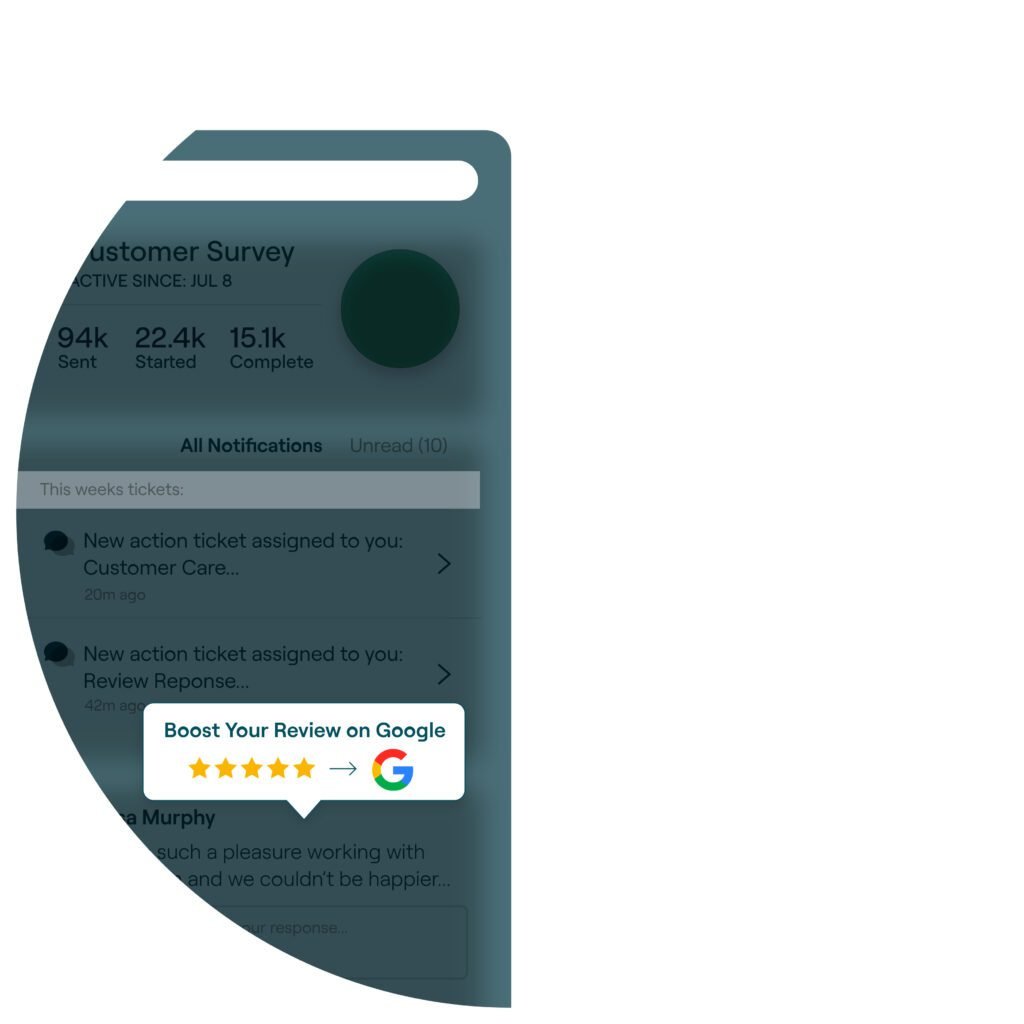
Reputation takes online reputation management several steps further by offering a comprehensive suite of tools tailored for businesses. It not only monitors your online mentions but also provides detailed analytics and insights, enabling you to understand sentiment and trends associated with your brand.
Key Features:
- Review management and response
- Social media monitoring
- Competitor analysis
Why It Stands Out:
The depth of analytics and the actionable insights Reputation provides can directly influence your strategy, helping you not just react to but proactively build a positive online persona.
3. Brandwatch
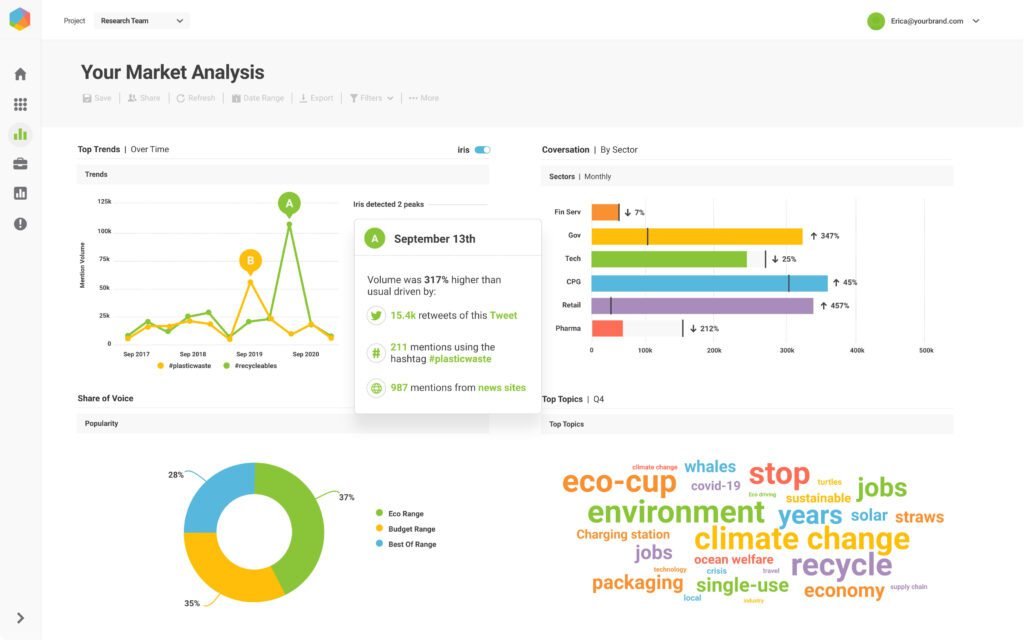
Brandwatch is a social media analytics tool that excels in its ability to sift through the vast expanse of social media to bring you relevant mentions and conversations about your brand. It utilizes advanced AI to analyze sentiment and trends, making it a powerful tool in the arsenal of any brand serious about its online presence.
Key Features:
- Advanced sentiment analysis
- Image recognition
- Data visualization
Why It Stands Out:
The precision of Brandwatch’s analysis tools, especially its capacity for image recognition, sets it apart. It can catch brand mentions that other tools might miss, such as logos appearing in images.
4. Brand24
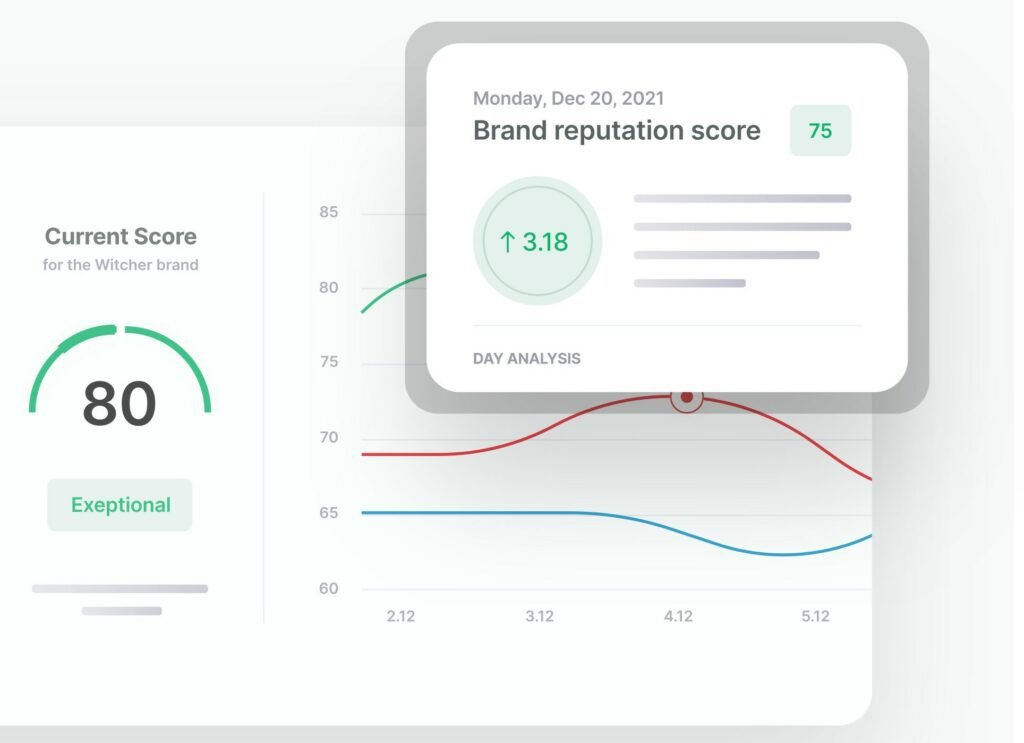
Brand24 steps into the realm of immediate interactions, offering real-time alerts and insights into what’s being said about your brand online. This immediate feedback loop is invaluable for businesses looking to engage with their audience without delay.
Key Features:
- Real-time mentions
- Sentiment analysis
- Influence score
Why It Stands Out:
Its emphasis on immediacy and its influence scoring system helps you prioritize responses and engage where it matters most, enhancing your brand’s perception and engagement.
5. Chatmeter
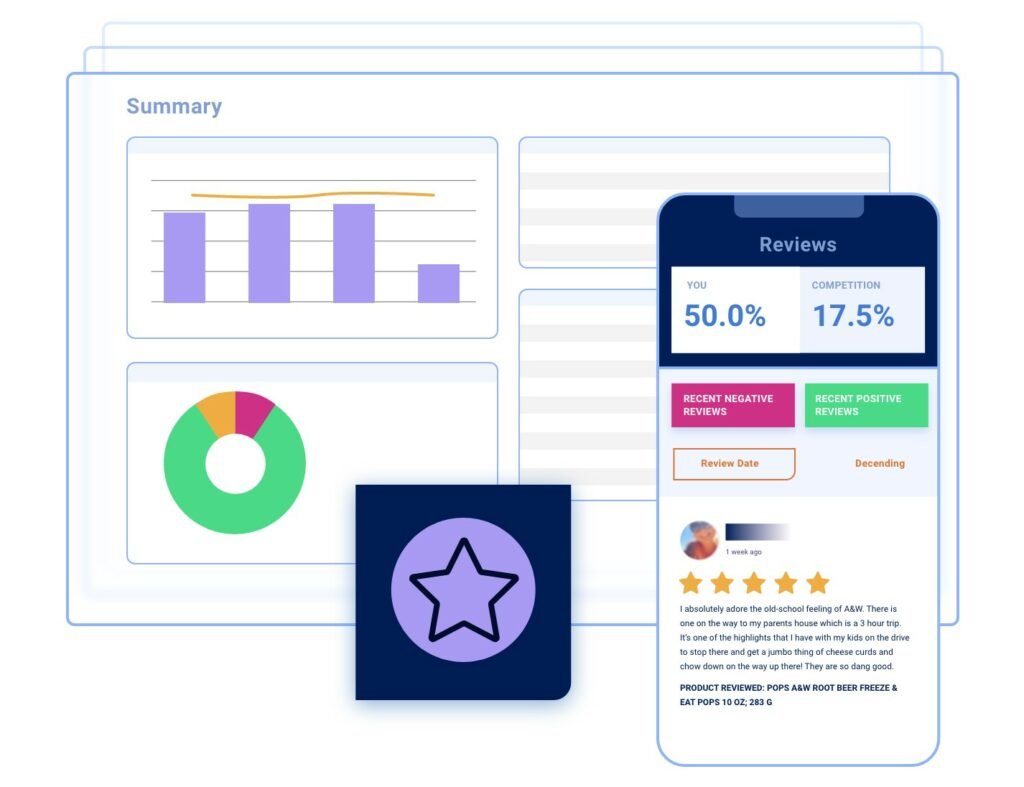
Tailored for businesses with a physical footprint, Chatmeter specializes in local SEO and reputation management. It helps businesses improve their visibility in local search results and manage reviews across multiple platforms.
Key Features:
- Local SEO optimization
- Review management
- Listing accuracy
Why It Stands Out:
For businesses whose online reputation is tied closely to their local presence, Chatmeter provides targeted tools to enhance local search visibility and manage public perception effectively.
6. ReviewPush
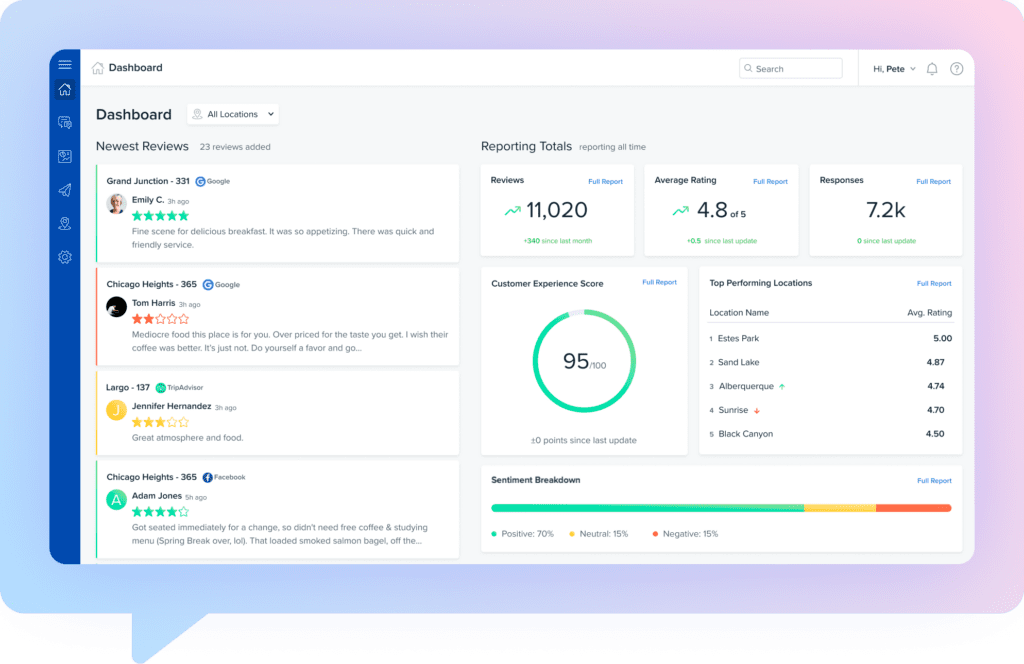
ReviewPush focuses on streamlining the review management process for businesses across various platforms. Centralizing the collection and response process makes it easier for businesses to maintain a positive online reputation through active engagement.
Key Features:
- Review aggregation
- Multi-platform response capability
- Reporting and analytics
Why It Stands Out:
Its user-friendly dashboard and comprehensive approach to reviewing management make ReviewPush a valuable tool for businesses of all sizes looking to actively manage and improve their online reviews.
How to Choose the Right ORM Tool
There is no single best online reputation management tool that works for every business.
The tool you choose should be based on what you need to monitor and how complex your reputation management process is. Consider these factors:
1. Review Management
If customer reviews are your main focus, choose a platform that can track and manage reviews across the relevant websites.
2. Social Listening
Brands with a strong presence on social media may need tools that can monitor broader conversations, not just formal reviews.
3. Local Reputation
Businesses with multiple locations should look for tools that support local listings, location-specific reviews, and centralized reporting.
4. Sentiment Analysis
Sentiment analysis helps identify whether online conversations are positive, negative, or neutral and can highlight potential reputation issues.
5. Reporting and Analytics
Pick a platform that lets you track trends and measure reputation performance over time.
6. Scalability
A tool that works for a small business might not be suitable if you have hundreds of locations or multiple brands.
Think about your future needs before making a decision. The best option depends on your goals. A small business might start with a simple monitoring solution, while larger brands may need advanced features such as social listening, review management, analytics, and multi-location capabilities.
Which Online Reputation Management Tool Should You Choose?
| Tool | Best suited for |
| Google Alerts | Basic brand monitoring |
| Reputation | Customer feedback and reputation management |
| Brandwatch | Social listening and consumer intelligence |
| Brand24 | Brand mentions and online monitoring |
| Chatmeter | Local and multi-location businesses |
| ReviewPush | Review monitoring and management |
The best option depends on your objectives. A small business may begin with a simple monitoring solution, while larger brands may need advanced social listening, review management, analytics, and multi-location capabilities.
Final Thoughts
Online reputation management is an ongoing process, not a one-time activity. The right tools can help you monitor conversations, manage reviews, understand customer sentiment, and detect reputation risks before they become bigger problems. However, these tools work best when used with a clear strategy, timely responses, strong customer service, and consistent monitoring.
Need help improving your online presence? Partner with First Launch for a data-driven digital marketing strategy that combines SEO, content, social media, and reputation-building efforts. Contact First Launch today to build a stronger digital presence and turn your online reputation into a competitive advantage.
Blog Posts We Recommend
Free YouTube SEO Tools | Tools to Boost Your Channel

