
Cross posting isn’t about publishing the exact same content on Instagram, Facebook, and LinkedIn. Posting identical content across every platform can feel like sending out junk mail. Instead, the key is to take one core idea and adapt it to match the audience, tone, and culture of each social media platform.
When done strategically, cross posting can save you a significant amount of time while helping you maintain a consistent brand voice across every channel.
Here are seven practical rules to transform your cross posting from a last-minute task into a well-planned social media strategy that delivers better engagement and stronger brand visibility.
Step 1: Understand the “Why” Before the “What”
Cross posting will not work if you do it without thinking. Before you share something, take a moment to think about what this content’s trying to do. What is the point of this content? It is the reason that’s more important than what the content is about. You have to know what you want to achieve with this content and what you want other people to remember after they see it. Cross posting is about sharing content. You have to think about what you want people to get from this content.
Do you want people to read your blog post? Do you want people to visit your website? Maybe you really want a lot of people to see what you have written on your blog. If that is what you want then you should think about what you’re doing and ask yourself if getting a lot of visitors is really what you want to achieve with your blog post. You should think about your blog. Ask yourself if getting more traffic to your blog is really what you are trying to do with your blog.
Are you trying to start a conversation with the people who are reading what you write? You might have something on your mind that you want to talk about and you want to know what other people think. Is this something that will make people want to talk to each other, share what they think and discuss things with each other? Conversation is what you are trying to start with the people who are reading your content.
Step 2: The 5-3-2 Content Rule
A good cross-posting plan needs to have balance. The 5-3-2 Rule is very helpful for this. If you follow the 5-3-2 Rule every week it helps make sure your cross-posting content is not too much about selling things. This way the people who see your content will stay interested in the -posting content instead of feeling like it is too much for them to handle. The cross-posting plan and the 5-3-2 Rule really work together to make this happen.
Here is how it works:
5 posts: Share content from others, such as curated links, user-generated posts, or relevant industry news.
3 posts: Publish original, educational content like your tips, insights, or how-to guides.
2 posts: Share promotional or sales-focused content.
This mix makes your feed feel really useful and fun to look at. When you do post something to sell something it does not feel like you are just trying to sell people things. This is because you have already shown people that you care about helping them by posting things that are useful. You are not just posting things that say buy this or buy that.
Step 3: Adapt the “Hero” Content for Each Platform
When you think about Instagram and Facebook think about how you want people to feel when they see your Instagram and Facebook post. What do you want to happen when people see your Instagram and Facebook posts? Do you want people to be happy or excited when they see your Instagram and Facebook posts? What do you want people to remember about your Instagram and Facebook post after they scroll past it?
If you know what you want people to get from your Instagram and Facebook post that will help you figure out what your Instagram and Facebook post should look like on each platform. Your main piece, like a blog post or a video or a product is what people are looking at. This is the idea that everything is based on.. This does not mean it has to look the same on every website. LinkedIn Focus on the process or the insight. Highlight a key lesson, a data point, or a professional takeaway from the work.

Step 4: Use a Cross-Posting Tool (The Right Way)
Automation is really useful because it can save you a lot of time. However you still need to think about what you’re doing. You cannot just keep posting the thing over and over again on every platform. Tools like Buffer or Hootsuite are very helpful when it comes to scheduling posts.. You need to make sure that each post is special for the platform it is going on. Automation is meant to help your strategy not take its place. When you use these tools correctly they can make your work a lot easier and more efficient. Automation like this can really make a difference in your workflow.
Step 5: Figure Out the Right Time to Post Naturally
The best time to post in the media depends on the platform and the people you want to reach. When you are making a plan for posting on sites, the time you post is just as important as what you are saying in your post. The time and the content of your post are both important things to think about when you are trying to reach your audience on these platforms.
People usually watch Instagram Reels the most, around the middle of the day. This is when Instagram Reels perform best. At this time people are taking breaks from work or school. They are scrolling through Instagram. They like to watch Instagram Reels during this time.
LinkedIn articles do really on Tuesday, Wednesday or Thursday mornings. Tuesday mornings are usually the time. People seem to like reading them. LinkedIn articles get a lot of views these days.
People tend to like and comment on Facebook posts when they are posted in the early evening on Facebook. Facebook is a place to share things and Facebook users are usually active on Facebook, around that time.
Paying attention to timing is really important. It makes your content feel more natural. When you time things right people are more likely to see the things you share. They are also more likely to engage with your content. Timing is key when it comes to your content. It really helps people notice the things you post.
Step 6: Talk To People Do Not Just Send Them Messages
When you are in the media it is very important to engage with people. Social media is a place where people talk to each other. So you should talk to people, not just send them messages.
* You should listen to what people’re saying about your company on the Facebook page of your company.
* You should respond to the comments people make on the Facebook page of your company.
When you post something on Facebook or Twitter or Instagram and then you do not do anything you are not doing it right. Social media is supposed to be social. It is not about putting things on the internet, it is about being there and talking to people and having a conversation. If you just put something on the media and then you go away, social media is like a big sign on the side of the road. It is not a way to connect with people. Social media is about being social and talking to people and having conversations, on media.
Cross posting is not the end of what you have to do. It is actually the start of talking to people about something. When you do cross posting that is when the real work begins with the conversation, about cross posting.
Step 7: Track What Connects (The 70/20/10 Rule)
The 70/20/10 rule is a way to think about how the Internet works. The 70/20/10 rule says that 70% of the Internet is people talking to each other. 20% of the Internet is people talking about the things they like.. 10% of the Internet is people trying to sell things to each other. So when we talk about the 70/20/10 rule we are talking about how people use the Internet. The 70/20/10 rule helps us understand what connects with people on the Internet.
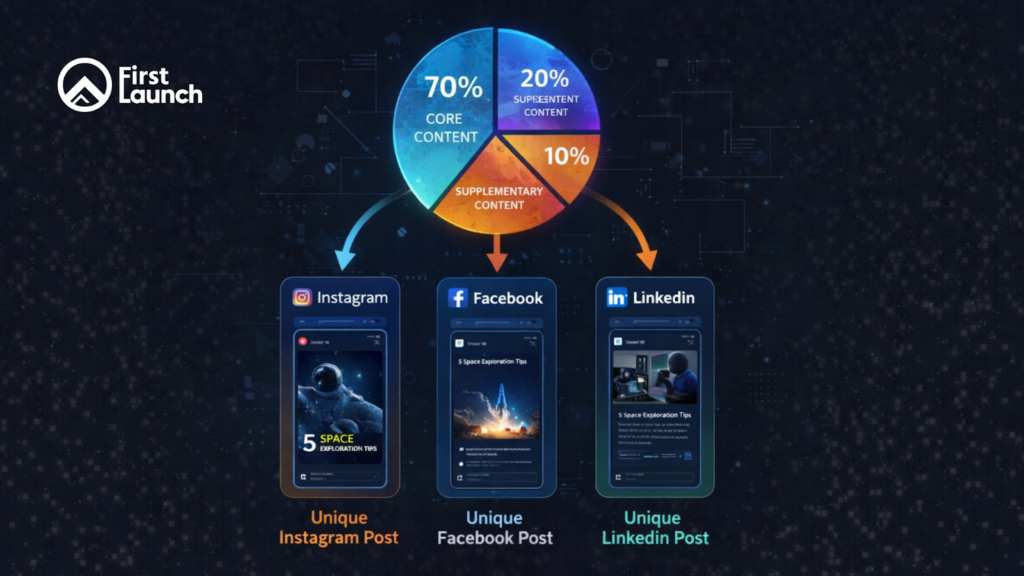
Most of your content, like seventy percent of it, should be things that you know your audience likes. This is the stuff that has worked before and that people usually respond to. You should use the things that have already been successful like posts that you have shared before and adapt them so you can share them again. This helps people see that you are still around and that they can count on you to share things without having to come up with something completely new all the time.
You should use another 20 percent of your content, for testing. This is the part where you try out platforms or tweak the messaging of your content. You can also experiment with content formats. These new ideas should not just come out of air. They should be based on what you have learned from your existing content and how it has performed on different platforms.
The little bit that final 10% is where you can really try out some new things. This is the part where you get to be brave and take some risks. You can do something that’s completely different from what you have done before and just see what happens with the final 10%.
You should get into the habit of checking your analytics every month. What version of a post did well? Did the LinkedIn post get more people to click on it or did the Instagram video get more people to go to your blog? Use the things you learn from this to figure out how you will cross-post the LinkedIn post and the Instagram video, in the future. You will want to see what works best for the LinkedIn post and the Instagram video.
Cross-posting is meant to support your social media marketing, not overwhelm it. It’s not about being everywhere, it’s about being in the right place at the right time. Start with one piece of content this week. Apply all 7 steps. Adapt it, schedule it, and engage with your audience. You’ll save time, keep a consistent brand voice, and most importantly, build more meaningful connections wherever people find you.
Ready to Build Your Brand’s Cross-Platform Story?
At First Launch – Digital Marketing Agency in Bangalore, we help brands move beyond disconnected posting and create compelling, unified narratives that work across Instagram, LinkedIn, YouTube, and beyond.
If you’re ready to turn your social media channels into chapters of one powerful story let’s talk. We’ll help you map your narrative, connect your content, and build a social strategy that people actually follow.

