“The difference between a good campaign and a great one is often hidden in the data you’re not tracking.”
The Invisible Leak in Your Marketing Funnel
You’ve launched a perfectly planned campaign. Clicks are rolling in, impressions look strong, and the dashboard shows solid engagement. But when it’s time to measure results, something feels off, the conversions don’t align with the leads or sales your team actually sees.
This silent disconnect is one of the most common and costly issues in digital marketing: poor conversion tracking.
While most marketers focus on audience targeting, ad creatives, or bidding strategies, few realise how much inaccurate conversion data can distort performance insights, drain ad spend, and mislead optimisation efforts. In a world where every platform relies on machine learning and automated bidding, accurate data is the currency of optimisation. Lose that accuracy, and even the smartest campaigns start flying blind.
The Benefits of Accurate Conversion Tracking
Before understanding how to fix poor tracking, it’s important to see what accurate conversion tracking unlocks for your campaigns.
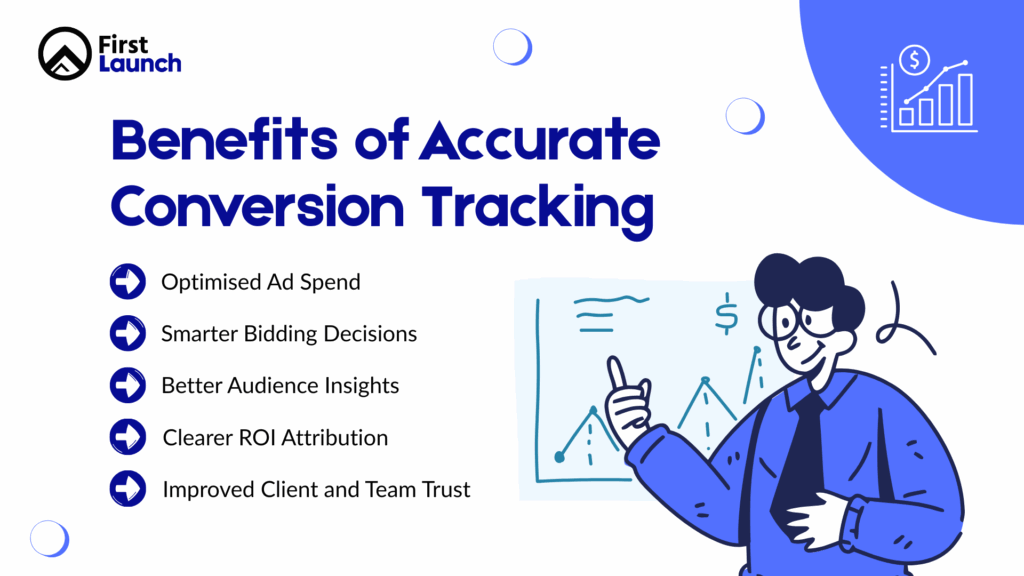
- Optimised Ad Spend
When your tracking is precise, ad platforms learn which clicks actually lead to sales or leads. That means your budget automatically flows toward audiences and creatives that truly perform, not just generate noise. - Smarter Bidding Decisions
Platforms like Google Ads and Meta rely heavily on conversion signals. Clean, reliable data allows smart bidding algorithms to identify high-intent users faster, lowering your CPA and boosting ROAS. - Better Audience Insights
Accurate tracking helps you understand which keywords, placements, and demographics convert best. You can then refine your targeting and messaging with data-backed precision. - Clearer ROI Attribution
When conversions are tracked correctly across channels, you can finally see which campaigns are driving results, and justify your budget allocation with confidence. - Improved Client and Team Trust
Accurate numbers build credibility. When your CRM and ad dashboards align, reporting becomes easier, clearer, and more trustworthy for both internal teams and clients. Inaccurate conversion tracking doesn’t just affect dashboards, it undermines credibility.
Types of Conversion Tracking You Should Know
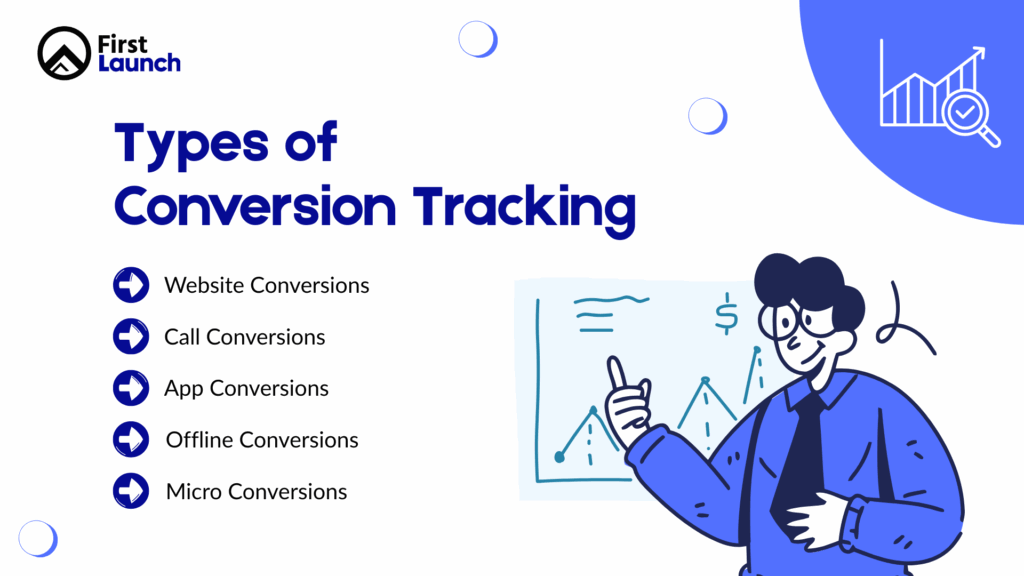
Different businesses measure success differently, and that’s where understanding the main types of conversion tracking comes in. Here are the most common categories every performance marketer should know:
- Website Conversions
Actions taken directly on your website , such as form submissions, product purchases, demo bookings, or downloads. These are typically tracked through tools like Google Tag Manager or event snippets.
- Call Conversions
Calls from ads or website phone numbers can be tracked via Google Ads Call Tracking or third-party tools. Especially vital for service-based businesses.
- App Conversions
For mobile-first brands, tracking app installs, in-app purchases, or sign-ups via Firebase or SDK integrations ensures visibility into mobile user actions.
- Offline Conversions
Not every conversion happens online. Importing offline conversions (e.g., store visits or CRM sales) into ad platforms bridges the gap between digital and real-world results.
- Micro Conversions
Smaller actions like “add to cart” or “newsletter sign-up” may not be final sales, but tracking them reveals intent and helps optimise remarketing efforts.
By combining these types, you create a full-funnel view of performance, from awareness to purchase.
Common Causes of Conversion Tracking Errors
Tracking errors can creep in from many places, and often, they aren’t immediately visible. Here are some of the most common culprits:
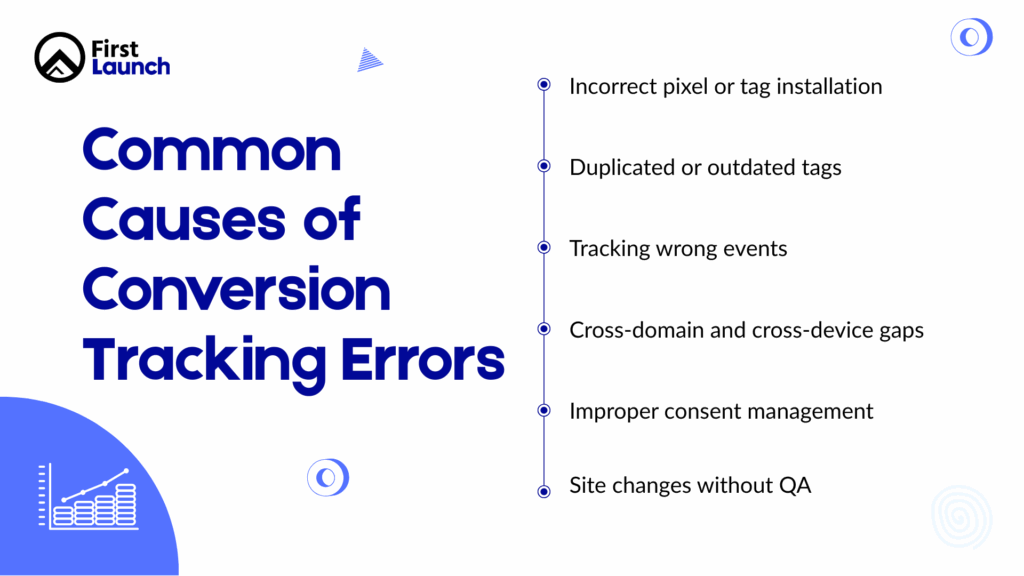
- Incorrect pixel or tag installation: The most basic but frequent mistake, the conversion pixel is missing, firing on the wrong page, or not firing at all.
- Duplicated or outdated tags: Over time, multiple team members may install different tags, leading to redundant or conflicting tracking.
- Tracking wrong events: Counting “form opens” or “button clicks” as conversions instead of completed submissions.
- Cross-domain and cross-device gaps: Users might start a journey on mobile and finish on desktop, but tracking isn’t set up to capture that transition.
- Improper consent management: With privacy laws and cookie restrictions, certain tracking setups may fail without proper consent mechanisms.
- Site changes without QA: A small update to a website or landing page can break tag firing rules if not tested properly.
How to Detect Conversion Tracking Issues
The good news? Tracking errors leave a trail, and with regular audits, you can detect them early.
- Compare Data Across Platforms
Check if your Google Ads conversions align with GA4 or your CRM system. Large discrepancies usually point to tag issues, attribution mismatches, or data sampling. - Use Debugging Tools
Use Google Tag Assistant, Meta Pixel Helper, or GTM Preview Mode to test whether your tags are firing correctly. Run test conversions to confirm that the “thank you” page or success event triggers the right tags. - Monitor Conversion Paths
In Google Analytics 4, analyse conversion paths to see if the user journeys make sense. If conversions are attributed to irrelevant touchpoints, you might be tracking the wrong event. - Conduct Regular Audits
Set a monthly or quarterly schedule to review your tag setup in Google Tag Manager, check data layers, and validate firing conditions.
These statuses below indicate the health of your conversion tracking setup, showing whether everything is working properly or has any issues :

How to Fix and Future-Proof Your Conversion Tracking
Once you’ve identified issues, it’s time to clean up and strengthen your tracking infrastructure.
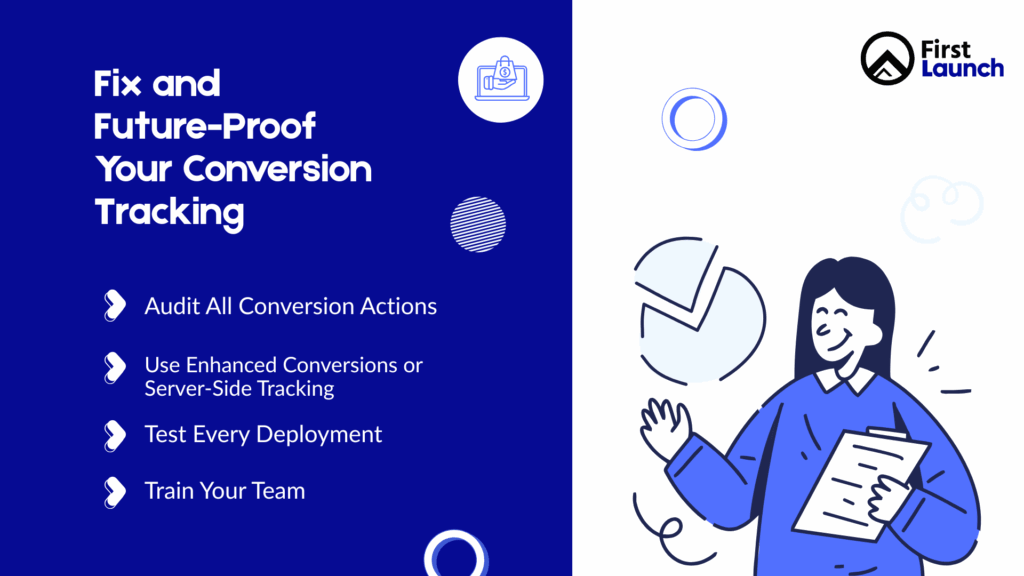
- Audit All Conversion Actions
Review every active conversion in your ad accounts. Remove duplicates, merge redundant actions, and rename them clearly to avoid confusion. - Use Enhanced Conversions or Server-Side Tracking
Both Google Ads Enhanced Conversions and Meta’s Conversions API use hashed first-party data to improve accuracy even when cookies are limited. Server-side tracking routes data more securely and reliably. - Test Every Deployment
Before launching new campaigns or pushing website updates, always run QA on tags and events. Make test conversions part of your go-live checklist. - Train Your Team
Make conversion tracking a shared responsibility, not a one-person task. Train campaign managers, developers, and analysts to understand how tracking ties back to campaign performance.
Measuring the Impact of Correct Tracking
Once your tracking setup is fixed, you’ll start noticing a difference almost immediately:
- Smart bidding becomes more efficient.
- Conversions and cost-per-result metrics stabilise.
- Budget allocation aligns more closely with real performance.
- Reporting confidence improves across teams and clients.
- A cleaner dataset helps platforms learn faster and optimise better, resulting in higher-quality leads and improved ROAS.
Conclusion: Accuracy Is the New Growth Hack
In digital marketing, data accuracy isn’t just technical hygiene, it’s your competitive advantage. When your tracking is precise, every decision, bid, and optimisation you make becomes more informed and more profitable.
Think of it this way: your marketing campaigns are only as smart as the data you feed them.
Before your next campaign launch, take a step back and ask, are we measuring what really matters?
If the answer is uncertain, it’s time to audit your conversion tracking and fix the leaks before they drain your marketing momentum. Partner with First Launch, a top performance marketing agency in Bangalore, to set up conversion tracking that powers smarter decisions and stronger ROI.
Blog written by Ashlesha Vilas, First Launch

